Home › Concrete and Block Masonry
We install and repair concrete block masonry in Dayton, OH for foundations, garages, additions, and site walls. Our team lays CMU blocks on solid footings, reinforces them as needed, and fills cores so you get straight, plumb, and structurally sound block walls that support your home and landscape.
Superior Masonry Dayton provides professional block masonry throughout Dayton, OH, Ohio and the surrounding area. Our licensed, insured crew delivers safe, clean, on-time work with a free estimate before anything begins. Call (937) 519-2353 or request your free quote.
Concrete and block masonry for Dayton homes and businesses
Concrete and block masonry is the backbone of many structures in Dayton, from basement walls in older neighborhoods to new commercial buildings along major routes. At Superior Masonry Dayton, we focus on block masonry that fits how people actually live and work here, taking into account our freeze-thaw cycles, clay-heavy soils, and local building codes.
Whether you need a new block foundation, a structural wall for an addition, a concrete block garage, or repairs to damaged blockwork, the process always starts with a site visit. We look at existing structures, drainage, nearby tree roots, and any cracking or settling already in place. This local evaluation is critical in the Miami Valley, where soil movement and seasonal moisture changes can affect how long your masonry will last.
Our goal is simple: build or repair block and concrete structures that stay plumb, level, and dry for the long haul in Dayton conditions, not just look good on day one.
How we build with concrete block, step by step
For a typical block masonry project, we follow a clear sequence so you always know what is happening at your property.
First, layout and excavation. We mark the footprint with strings and stakes, then excavate to the required depth. In Dayton, that usually means going below the frost line (around 32 inches) for structural work. We also evaluate where water naturally flows across your yard so we can avoid future seepage against the wall.
Second, base and footing. A compacted gravel base is placed where needed, then we form and pour a concrete footing with the proper width and rebar pattern. Footing size and reinforcing depend on wall height, soil conditions, and whether the wall is load bearing. The concrete is vibrated or rodded to eliminate voids, then left to cure to a safe strength before block is placed.
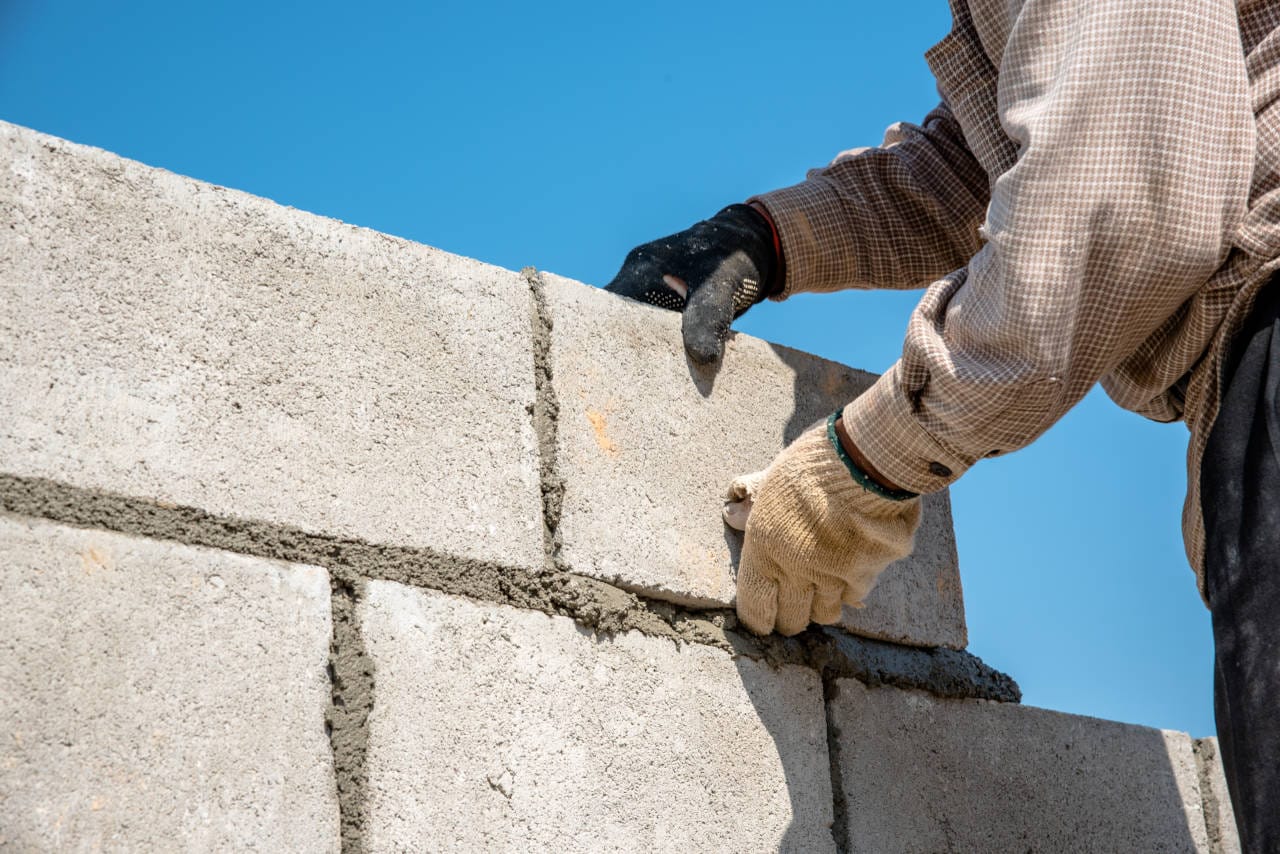
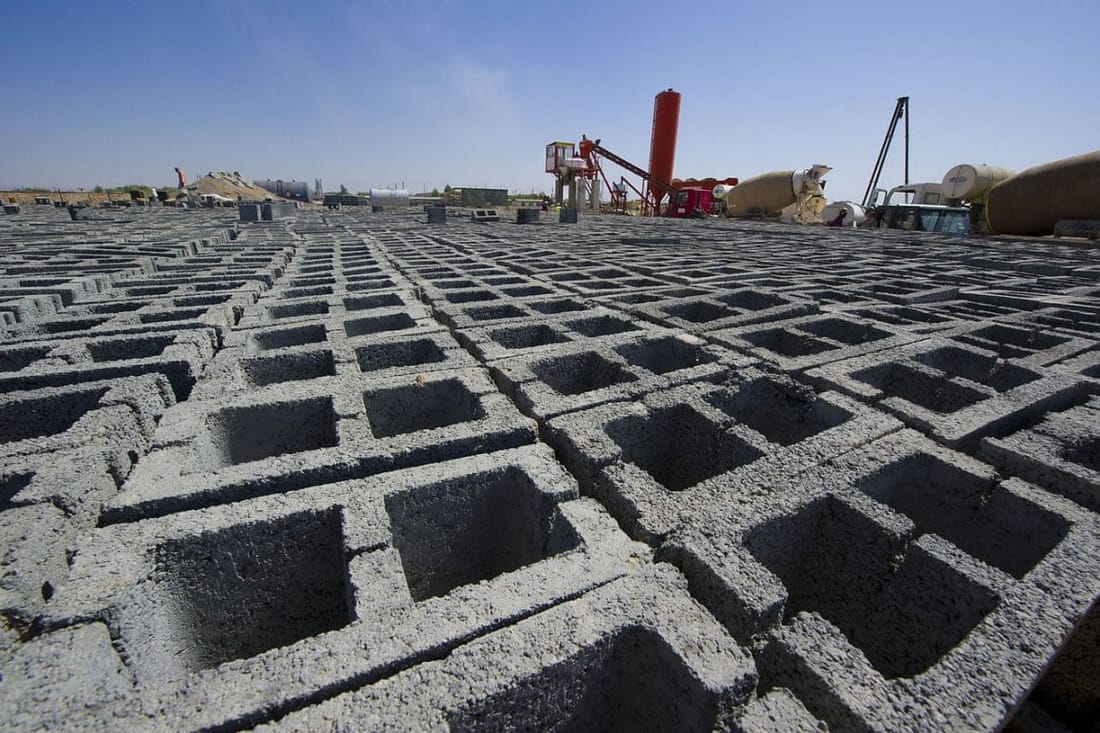
Third, block laying. We snap lines on the footing to keep the first course straight, then set the first row of concrete masonry units (CMU) in a full bed of mortar. The first course is carefully leveled in both directions, since any error here grows as the wall goes up. Subsequent courses are laid in a running bond pattern, joints staggered, with head and bed joints fully filled. Vertical rebar is threaded through hollow cells where specified, and those cells are later grouted solid.
Fourth, reinforcement and grouting. Depending on structural needs, we add horizontal joint reinforcement, bond beams, and solid grouted cores. This is especially important for taller walls, garage walls that carry roof loads, or retaining walls that hold back soil after heavy Ohio rains.
Fifth, finishing details. We tool mortar joints for proper water shedding, install weep holes or drain tile where needed, and, if the block will be exposed, we clean the surface and can apply clear sealers or coatings. For walls that will be backfilled, we install waterproofing membranes and drainage systems before soil is returned.
Concrete and block options that work in Dayton’s climate
Concrete blocks are not one size fits all, and the right choice depends on how the wall is used and what it will be exposed to in our local climate.
Standard gray CMU is the workhorse option. It is reliable and cost effective for foundations, basement walls, interior partitions, and garages. For outdoor or visible areas, such as garden walls, dumpster enclosures, or building facades, we often suggest split-face or colored block, which provide more texture and do a better job hiding dust and minor wear from road salt and winter grime.
For structures that face the brunt of Dayton winters, like exterior foundation walls and retaining walls, we often combine block masonry with additional insulation and water management. This might be rigid foam board on the exterior, a waterproofing membrane, and a perforated drain tile system leading to a sump or daylight drain. This layered approach helps keep basements dry and reduces pressure from frost and saturated soil.
Concrete flatwork often ties into block construction as well. If we are building a block garage, for example, we coordinate the slab thickness, reinforcement, and control joints so the slab and block walls move together, minimizing cracking where they meet. In high-traffic residential driveways or shop floors, we may recommend thicker slabs and stronger concrete mixes than the minimum code requirement based on your specific use.
What affects the cost of block masonry in Dayton
Customers often ask why similar sized walls can have very different prices. Several project-specific details influence cost, and understanding them helps you compare estimates fairly.
Site access is a major factor. If we can bring in trucks and forklifts close to the work area, labor time goes down. If materials have to be carried through a narrow side yard, around fences, or down steep slopes, more labor is involved. In older Dayton neighborhoods with tight lots, we plan for this in advance.
Soil and drainage conditions also affect cost. Soft or saturated soils may require wider footings or additional reinforcement to resist settling. If there is evidence of standing water, failed gutters, or poor grading, we may recommend added drainage components. These items add up front cost, but they dramatically reduce the chance of structural or moisture problems later.
Wall purpose and engineering requirements matter as well. A retaining wall that holds back several feet of soil or a wall that supports roof loads must be engineered with rebar, grout, and sometimes tie-backs or stepped footing systems. This uses more materials and labor than a simple non-load-bearing partition wall.
Finish choices and add-ons influence pricing too. Decorative block, colored mortar, parging coats, stucco, or waterproofing membranes all add to the overall investment. During our estimate, Superior Masonry Dayton breaks these line items out so you can see exactly where your money is going and which features are optional versus required.
Common block masonry problems we see in Dayton and how we fix them
Because Dayton has cycles of freezing and thawing, clay soil that expands when wet, and many older homes, we see recurring patterns of block masonry issues.
Horizontal cracks in basement block walls often indicate soil pressure or poor drainage. For these, we evaluate whether the wall is still structurally sound or if it has begun to bow. Solutions range from adding interior reinforcement and exterior waterproofing and drain tile, to partial or full wall rebuilds in severe cases. We never suggest the biggest fix first; instead, we walk you through what is actually necessary.
Step cracking along mortar joints near corners usually points to minor settling. We look for related signs, such as sticking doors or uneven floors, to determine if the problem is isolated or part of a larger foundation issue. Small cracks can often be repointed and monitored, while more advanced movement might call for underpinning or foundation stabilization.
Spalling block faces, where surfaces flake or crumble, are frequently tied to trapped moisture, improper sealing, or prolonged exposure to deicing salts. Repairs may involve removing damaged units, installing new block, improving drainage, and applying breathable sealers that let moisture escape rather than trapping it.
In all cases, Superior Masonry Dayton focuses on source repair. We do not simply patch cracks; we find out why they formed in the first place so you are not paying to fix the same problem again a few winters later.
Scheduling and timing concrete and block work around Dayton weather
Concrete and block masonry is very sensitive to temperature and moisture, which is why planning around our local seasons matters.
In spring, the ground is often wet and soft. We pay close attention to soil conditions and may delay excavation if there is a risk of trench collapse or footing settlement. Spring is also a prime time for drainage upgrades, since you can clearly see where water collects on your property.
Summer offers the best window for most exterior masonry work in Dayton, although we still protect fresh concrete and mortar from rapid drying in hot, windy conditions. We schedule pours and block setting for cooler parts of the day when necessary and keep materials shaded or dampened to maintain proper curing.
Fall can be an excellent time for projects like foundation repairs or new garage walls, as long as overnight temperatures stay above freezing or we use cold-weather techniques. Once temperatures start dipping low, we use insulated blankets, heated enclosures, and adjusted mix designs to ensure concrete and mortar gain strength correctly.
Winter work is possible but more involved. For structural projects, we often recommend planning major work for milder stretches or the next season, then using temporary measures to keep your property safe and functional in the meantime. Our estimates will clearly state any added cost associated with cold-weather setups so you can choose the right timing for your project.
Why neighbors trust Superior Masonry Dayton for block masonry
Our approach is local and practical. We live and work in the Dayton area, so we understand how a February freeze, a heavy summer downpour, or tree roots from a mature neighborhood street can affect your concrete and block structures.
When you contact Superior Masonry Dayton, we start with questions about how you use the space and what problems you are trying to solve. For example, a block retaining wall for a steep backyard in Kettering needs different design choices than a new CMU foundation for a ranch home in Beavercreek. We tailor reinforcement, drainage, and finish options to each situation instead of applying a one-size-fits-all design.
You receive a written estimate that spells out materials (block types, rebar sizes, concrete strengths), construction steps, and project timeline. During the job, we are clear about what is happening each day, how long curing pauses will last, and when inspections are required. That way you do not feel left in the dark about why crews are waiting before the next step.
If you are comparing contractors for block masonry or concrete work in the Dayton, OH area, we encourage you to ask each one how they handle drainage, frost protection, and reinforcement. If those topics are not covered in detail, you may not be getting a long-term solution. Superior Masonry Dayton will gladly explain the reasoning behind every recommendation so you can make a confident, informed decision for your property.