Home › Brick Retaining Walls
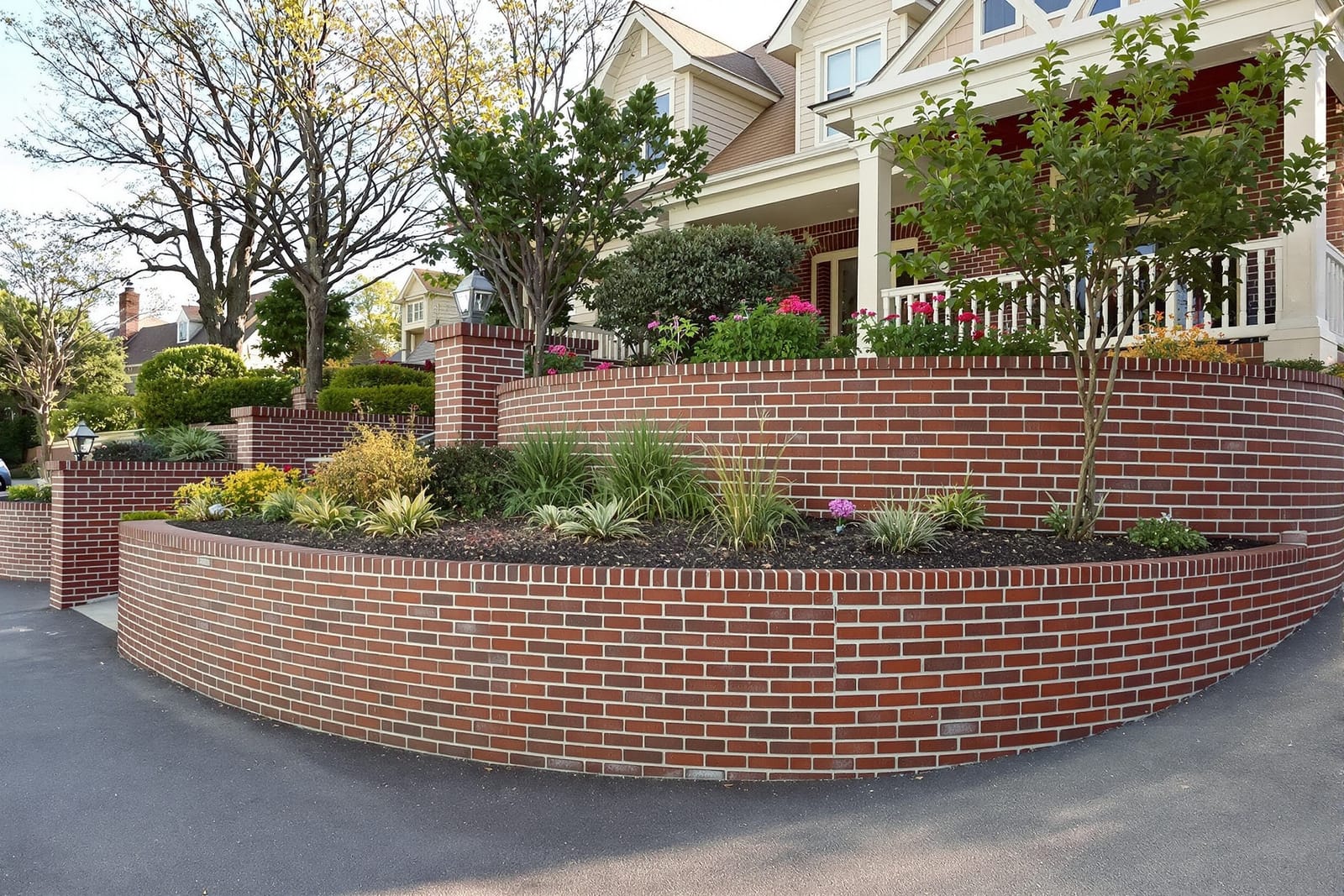
Our brick retaining walls in Dayton, OH are engineered to handle soil pressure while improving the look of your landscape. We design and build garden walls, raised beds, and boundary walls with proper footing, drainage, and brick layout so your wall stays straight and strong year after year.
Superior Masonry Dayton provides professional brick retaining walls throughout Dayton, OH, Ohio and the surrounding area. Our licensed, insured crew delivers safe, clean, on-time work with a free estimate before anything begins. Call (937) 519-2353 or request your free quote.
Brick Retaining Walls Built for Dayton’s Soil and Weather
Brick retaining walls are more than a decorative edge in your yard. In Dayton, they are often working hard to hold back sloped soil, protect foundations, and keep patios and driveways from shifting. At Superior Masonry Dayton, we design each wall around your specific grade, soil conditions, and how you plan to use the space, rather than just stacking brick in a straight line and hoping it holds.
The first thing we look at is what the wall actually needs to do. A small garden terrace has very different requirements from a 5 foot wall that is supporting a driveway. We check slope, the height you need, how close the wall is to your house or neighboring properties, and what is sitting up above the wall, such as a car, a shed, or a heavy grill station. This tells us how much load the wall must safely handle.
Local conditions matter. Dayton’s freeze thaw cycles and occasional heavy rains can push on a retaining wall from behind if drainage is not handled correctly. Clay pockets that we see throughout parts of Montgomery County, Kettering, and Beavercreek hold water, which increases pressure on the wall. A design that might survive in a drier climate can fail here. We build your brick retaining wall with this local reality in mind, from the footing depth to the type of backfill we choose.
By the time we start talking about brick colors and patterns, we already have a clear plan for structure and drainage. That way, your wall is not just attractive on day one, but still standing straight years down the road after multiple winters and spring storms.
How We Build a Brick Retaining Wall That Actually Holds
Our process at Superior Masonry Dayton is straightforward, but every step is critical. Skipping or rushing any of these steps is usually why retaining walls crack, lean, or collapse.
1. Site evaluation and layout: We start by marking the exact line and height of the wall. We check for utilities, measure slope with a level or laser, and look at existing drainage patterns. If the wall is above a certain height or is supporting a driveway or structure, we may recommend involving an engineer to approve the design.
2. Excavation and base preparation: We dig out a trench deeper than the first course of brick and wide enough to include the footing and drainage. In Dayton, footing depth is usually set below the frost line to reduce heaving. Then we install and compact a gravel base, which prevents the footing from settling unevenly.
3. Footing and structural core: Unlike a simple garden border, a real retaining wall is usually built on a reinforced concrete footing. We set forms, place rebar as needed based on the wall height and load, and pour concrete. For many structural brick retaining walls, the actual load bearing core is concrete block or poured concrete, with the brick as the face. This hybrid construction gives you the classic brick look with the strength required for taller walls.
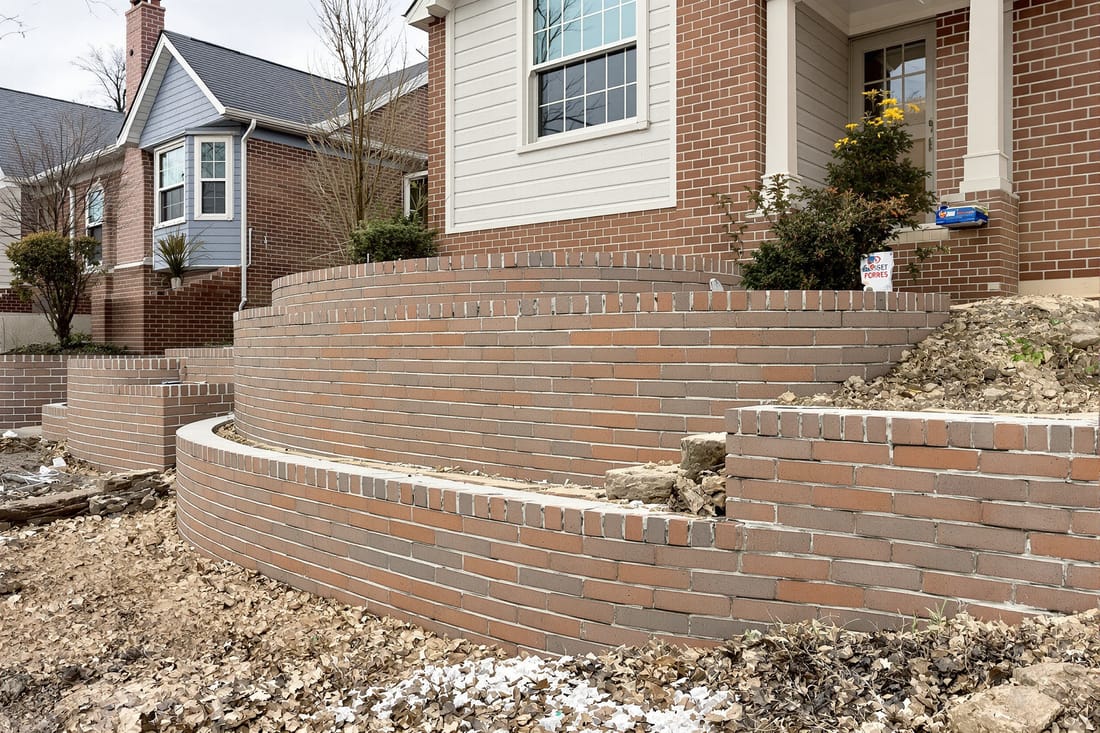
4. Brick installation and reinforcement: We lay brick in courses using mortar formulated for exterior use in our climate. For structural walls, we tie the brick veneer mechanically to the core so it moves as one system instead of as a separate shell. We pay close attention to joint thickness, pattern, and control joints to reduce visible cracking.
5. Backfill, drainage, and final grading: Behind the wall, we install a perforated drain pipe at the base that outlets to a safe location. We surround it in washed stone or clean gravel, then use compacted layers of suitable backfill. This step is where many DIY walls fail, since poor backfill traps water behind the wall. We finish with grading and sometimes add a cap brick or stone for a finished look and added stability.
Design Options for Brick Retaining Walls in a Dayton Yard
Once the structure and drainage are planned, you can have fun with the look of the wall. Superior Masonry Dayton helps you choose a design that fits both your home and the neighborhood, whether you are in a historic Dayton district or a newer subdivision.
Brick types: You can use traditional red clay brick for a classic Midwest look, tumbled brick for a softer, aged appearance, or a more modern, uniform brick for contemporary homes. We pay attention to coordinating with your existing brick on the house, including size, color blend, and texture. If your home uses a specific manufacturer’s brick, we will look for the closest match or a complementary color.
Patterns and layout: Common bonds like running bond, stacked bond, or Flemish bond offer different visual effects. For shorter garden walls, we can introduce brick soldier courses, headers, or a contrasting cap to highlight steps or seating areas. On longer walls along driveways or property lines, we sometimes break up the run with brick pilasters that add strength and visual interest.
Tops, caps, and integrated features: A simple brick cap is the most budget friendly, but many Dayton homeowners like a slightly overhanging stone cap for a more upscale look and a comfortable seating surface. We can also integrate steps into the wall, create terraced levels for planting beds, or leave openings for landscape lighting. For clients along small slopes, we often create a series of short tiered brick retaining walls instead of one tall wall. This can feel more natural and is sometimes safer and easier to maintain.
Because we work locally, we can also guide you on what tends to age well in Dayton’s conditions. For example, darker bricks often show efflorescence less, and certain textures hide minor staining from clay soils better than very smooth brick.
Costs, Permits, and What Affects the Price of a Brick Retaining Wall
The cost of brick retaining walls in Dayton can vary widely, and we try to be transparent about what drives those numbers. When Superior Masonry Dayton prepares a quote, here are the main factors we consider.
Wall height and length: The taller and longer the wall, the more material, excavation, and labor are required. Taller walls also typically need more robust footings, reinforcement, and sometimes engineering, which adds cost but also ensures safety.
Site access and conditions: A wall that we can easily reach with equipment is less expensive than one that requires hand digging or moving materials through a narrow side yard. Steep slopes, tree roots, or existing structures can increase labor. Poor soil, like very soft or saturated ground, may require additional base work or wider footings.
Structural requirements: A simple garden bed wall that holds only a small amount of soil will usually be less costly than a wall that supports a driveway, parking pad, or a building. Load bearing walls often require a concrete core, more steel reinforcement, and sometimes an engineer’s stamp to meet local codes and best practices.
Brick selection and design: Standard, locally available brick and a straightforward pattern will keep costs down. Special order bricks, complex patterns, decorative pillars, or stone caps add to the budget but can significantly upgrade the appearance. We always give you options so you can balance aesthetics and cost.
Permits and regulations: Depending on wall height and location, the City of Dayton or surrounding municipalities may require permits or inspections. We help you understand when permits are needed and can coordinate that process as part of the project. Skipping this step can cause headaches if you later sell the house or if a neighbor disputes a boundary or safety issue.
During our on site visit, we walk you through these factors as we see them in your yard. That way, the number you see on your estimate is connected to specific decisions and conditions, not a generic square foot price pulled from a chart.
Common Retaining Wall Problems in Dayton and How We Prevent Them
Because we spend so much time fixing failed retaining walls around Dayton, Superior Masonry Dayton designs new brick retaining walls to avoid those same issues from the start.
Leaning and bulging: This often comes from poor drainage or insufficient footing and reinforcement. We counter this by using a solid foundation, proper steel where required, and correctly compacted backfill. On challenging slopes, we may also step the footing or break the design into tiered walls.
Cracking and separation: Hairline cracks in mortar can be normal over time, but wide cracks, bricks popping out, or the brick face separating from the structural core are trouble signs. We use quality mortar mixes, correct joint spacing, and mechanical ties between the brick face and the structural wall so they act as one system. Control joints are added strategically to direct any movement into planned locations that are less noticeable.
Water and frost damage: In Dayton, trapped water that freezes behind or beneath a wall can cause heaving or blowouts. Our solutions include proper weep holes, drain tile at the base of the wall, free draining gravel backfill, and grading that sends surface water away from the wall, not toward it. We also talk with you about downspouts, sump pump outlets, or yard drains that may need to be redirected.
Efflorescence and staining: White powdery deposits on brick are common where moisture moves through masonry and leaves mineral salts on the surface. While usually cosmetic, they can be annoying. We minimize this by encouraging good drainage and using appropriate materials. If efflorescence does appear, we can clean it and show you how to maintain the wall safely without harsh chemicals that damage mortar.
Before we leave any job, we walk the wall with you and explain how it was built, where the drainage runs, and what simple maintenance will keep it performing well. Our goal is for your brick retaining wall to be something you do not have to think about every rainy spring or icy winter, because it was built for Dayton conditions from the ground up.